
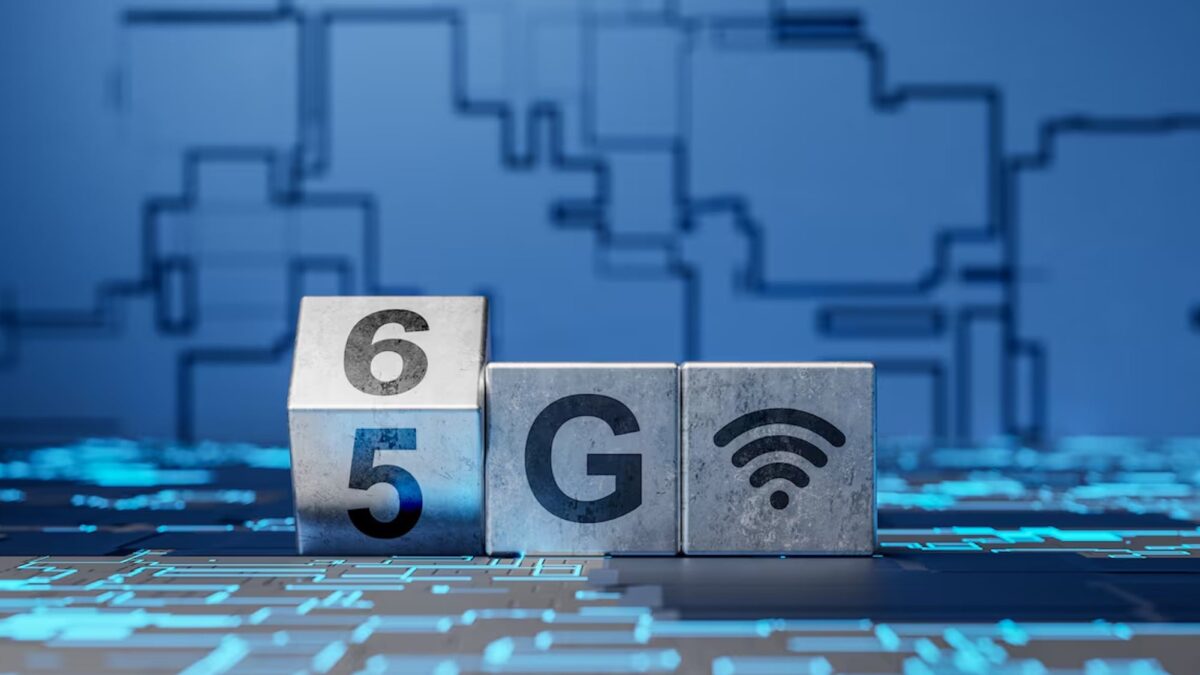
The world is in the middle of a connectivity revolution — and yet, the revolution hasn’t even fully begun. While many countries are still rolling out 5G, the next generation of wireless technology, 6G, is already taking shape in research labs, telecom boardrooms, and global policy discussions. And the implications are staggering.
If you thought 5G was fast, powerful, and transformative, 6G is expected to make today’s networks look primitive. We’re talking about terabit-per-second speeds, near-zero latency, intelligent networks, and entirely new kinds of digital experiences that border on science fiction.
The shift from 5G to 6G won’t just upgrade your smartphone — it will redefine economies, reshape industries, and fundamentally change the relationship between humans and technology.
Welcome to the wireless revolution.
5G: The Foundation of a Hyper-Connected World
Before we rush into the future, it’s important to understand what 5G already promises — and why it matters.
5G isn’t just “faster internet.” It’s the backbone for:
- autonomous cars
- AI-powered factories
- remote surgeries
- smart cities
- advanced IoT devices
- real-time cloud computing
Its biggest advantage is low latency — the ability to send data with barely any delay. This makes innovations like drone deliveries, smart-grid power systems, and immersive AR experiences possible.
But even with its huge potential, 5G is just Phase One of a much bigger transformation.
Where 5G Falls Short — and Why 6G Is the Next Leap
Despite its strengths, 5G still faces limitations:
- bandwidth constraints in dense urban areas
- limited support for massive IoT expansion
- energy inefficiency in large-scale deployments
- latency that isn’t low enough for next-gen AI systems
- challenges in remote and rural coverage
That’s where 6G enters the story — not as a replacement, but as a quantum leap.
6G aims to solve the weaknesses of previous networks and unlock entirely new capabilities.
6G: The Intelligent Network of the Future
If 5G is powerful, 6G is limitless.
Here’s what experts expect 6G to achieve:
1. Terabit Speeds (Yes, Terabits)
Imagine downloading a 24K movie in milliseconds.
6G is expected to reach speeds of 1 Tbps (terabit per second) — about 100 times faster than 5G.
This isn’t just about entertainment. These speeds enable:
- real-time holographic communications
- instant cloud rendering
- seamless brain–computer interfaces
2. Near-Zero Latency: 1 Millisecond or Less
6G could reduce latency to sub-millisecond levels, enabling:
- robotic surgeries performed from the other side of the world
- AI-powered drones coordinating autonomously
- military, disaster-response, and aviation systems that react instantly
3. AI-Native Networks
6G won’t just deliver internet — it will think.
AI will be built directly into the network, allowing it to:
- predict congestion
- optimize data flow
- self-heal and repair errors
- adapt to user behavior
This means smoother connectivity, better security, and far more efficient data management.
4. Massive Internet of Everything (IoE)
6G will enable a world where trillions of devices communicate seamlessly:
- smart homes
- smart cars
- smart factories
- smart agriculture
- smart healthcare systems
Every device will be part of an interconnected digital ecosystem.
5. Integration of Physical, Digital & Biological Systems
With 6G, the line between human and machine becomes thinner.
Technologies like:
- AR/VR/XR
- mixed reality work environments
- smart wearables
- neural interfaces
will move from experimental to mainstream.
The result? A hybrid reality where digital information overlays the physical world in real time.
How 6G Could Transform Africa’s Digital Future
Africa has been one of the world’s fastest-growing mobile markets for over a decade. The leap from 2G to 4G dramatically expanded access to financial services, e-commerce, and online education.
Now imagine the impact of 6G.
1. Smart Cities Built from the Ground Up
African cities could use 6G to manage:
- traffic flow
- public transportation
- energy grids
- healthcare systems
- waste management
This could create more efficient, cleaner, and safer urban environments.
2. Precision Agriculture at Scale
Farmers could use 6G-enabled tools such as:
- drone monitoring
- soil sensors
- smart irrigation
- AI-based yield predictions
Agriculture — a crucial African sector — would become more data-driven and climate-resilient.
3. Education Without Borders
6G-powered immersive education could bring:
- holographic teachers
- live global classrooms
- VR-based skill training
to even the most remote communities.
4. Better Healthcare Access
Rural villages could access real-time diagnostic tools, remote surgeries, and cross-border medical collaborations — all through 6G links.
Africa skipped landline infrastructure and went straight to mobile.
6G could deliver another leapfrog moment.
How Industries Will Be Transformed by 6G
1. Finance and Crypto
Instant global settlements, hyper-secure digital wallets, and blockchain networks running at unprecedented speeds become realities.
2. Transportation
Autonomous vehicles, air taxis, and coordinated drone fleets become part of everyday life.
3. Manufacturing
Factories become self-regulating, AI-driven, and fully automated with real-time digital twins.
4. Entertainment and Media
Forget streaming — think immersive experiences where users interact with digital worlds seamlessly.
5. Security and Defense
Real-time threat detection and AI-enhanced situational awareness redefine national security.
The Challenges on the Road to 6G
Despite the massive potential, 6G won’t arrive without hurdles:
- Infrastructure costs will be enormous
- Energy consumption must be sustainable
- Spectrum allocation will be highly competitive
- Cybersecurity risks will escalate
- Policy frameworks need to adapt quickly
6G isn’t expected to launch commercially until around 2030–2035, giving the world time to prepare — but also highlighting how much work remains.
5G to 6G: A Transition That Redefines Everything
The shift from 5G to 6G won’t just be a technical upgrade — it will be a social, economic, and cultural transformation.
Think of it like moving from dial-up internet to the smartphone era… multiplied by ten.
We’re stepping into a future where:
- data is instant
- networks are intelligent
- AI is everywhere
- digital and physical reality merge
And at the center of all this is wireless innovation.
Final Word: The Future Will Belong to the Hyper-Connected
From faster speeds to intelligent networks, from smart cities to immersive realities, the journey from 5G to 6G is not just evolution — it’s revolution.
The countries and companies that prepare for 6G now will shape the next digital era.
And the individuals who understand this shift will have opportunities the world hasn’t even imagined yet.
The wireless revolution is here. The real question is: Are we ready for the future it brings?
